
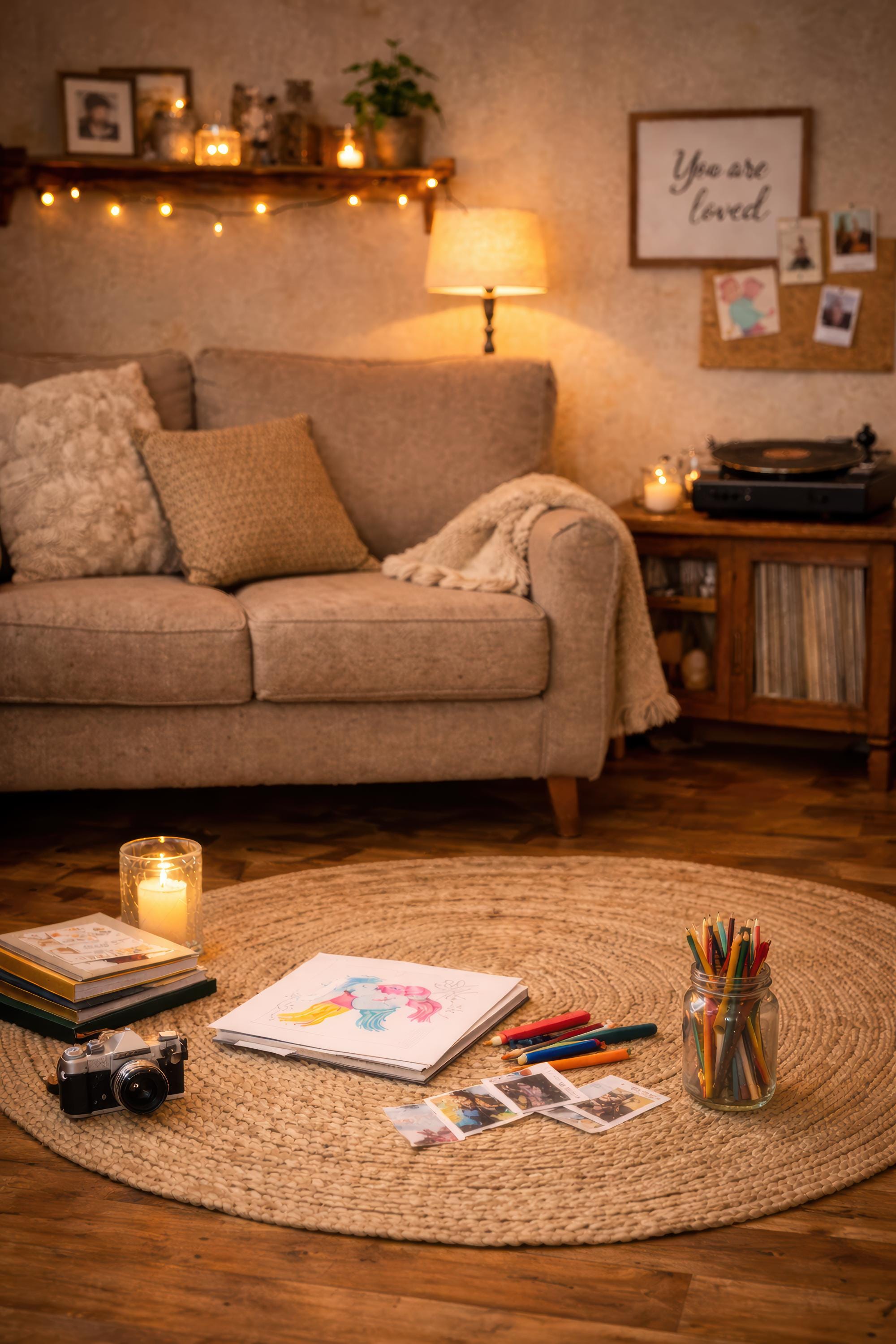
The other night I walked into my daughter’s room expecting to find her exactly where every parent assumes their child will be in 2026: bent over a glowing screen. Instead, she was sitting cross-legged on the floor, surrounded by paper, markers, and a half-finished drawing of a unicorn that looked like it had just galloped out of a pastel dream.
“Look!” she said, holding it up proudly. And in that moment I realized something. The quiet felt different. Not the silence of boredom. Not the silence of everyone scrolling their own corner of the internet. It was the kind of quiet that feels alive. The kind where imagination is doing the talking. That moment small and ordinary is the reason our home has slowly, intentionally become a little more unplugged. Not anti-technology. Not “throw the iPads in the bin” dramatic.
Just… a little less noise. And a little more meaning.
Let’s be honest for a second. The world our children are growing up in never switches off. Phones buzz. Tablets glow.Notifications appear like tiny demands for attention.
Even adults struggle with it. How many times have we picked up our phone “just to check one thing” and suddenly twenty minutes disappear into a vortex of news headlines, TikTok recipes, and someone’s dog learning how to skateboard? Exactly. Now imagine being a child whose brain is still learning how to filter all of that. The constant stimulation can feel normal but it’s not necessarily peaceful.
And that’s where the idea of digital minimalism started creeping into our family life. Not because we’re perfect. But because we noticed something important. When the screens disappeared for a while…something better showed up... Boredom: The Secret Ingredient We Forgot
Parents today often feel pressure to keep kids entertained.
Activities.
Clubs.
Screens.
Educational apps.
Learning games.
But here’s the truth nobody says loudly enough: Boredom is wildly underrated. When kids are bored, their brains start doing something magical.
They invent.
They draw.
They build strange Lego contraptions that make absolutely no sense but somehow involve a dragon, a spaceship, and a pizza shop.
Boredom creates imagination. And imagination creates memories. Some of my daughter’s best ideas from stories she writes to little art projects she proudly tapes to the wall come from moments when nothing else was demanding her attention. No algorithm.
No autoplay.
Just space to think.
A slower home doesn’t mean a boring one. It means the opposite. It means the energy in the house shifts. Instead of everyone disappearing into separate digital bubbles, the space becomes… shared again.
You notice things...
The way sunlight hits the wall in the afternoon.
The silly conversations that happen while cooking dinner.
The random dance parties that start for absolutely no reason. And something else happens too. Kids begin to value real things again.
Paper books.
Drawing pads.
Photos.
Keepsakes. Little objects that hold memories instead of pixels. Those things stick around. They live on shelves. They hang on walls. They become part of the home’s story. In a world where most memories live inside phones, physical reminders have quietly become more powerful. A printed affirmation above a child’s bed. A framed quote that reminds them they are brave. A piece of art they see every morning while brushing their teeth. These small things shape the environment kids grow up in. And environment matters more than we realize. Children absorb messages from their surroundings constantly. When those messages say things like: You are strong. You are capable. You are loved. Those words sink in over time. Not through a screen. But through daily life. Through repetition. Through the quiet moments in between everything else.
Let’s be real. Our house still has screens. My daughter still loves games. And yes, sometimes we absolutely collapse on the couch for a family movie night with popcorn everywhere. Digital minimalism isn’t about removing technology from life. It’s about making sure technology doesn’t replace life. It’s the difference between using devices intentionally… and letting them quietly take over. Sometimes that simply means: Putting phones away during dinner. Leaving tablets in another room for a few hours. Creating spaces in the house that feel calm, creative, and screen-free. Little changes. But meaningful ones.
When children grow up, they rarely remember the apps they used. But they remember:
The stories read before bed. The art projects spread across the kitchen table. The quotes that hung above their bed for years. The feeling of a home that felt warm and safe. They remember the atmosphere. And atmosphere is something we quietly create every day. With the choices we make about how our homes feel. How our spaces look. And how present we are with the people inside them.
The world outside moves fast. Faster every year. But inside a home, things can feel different. Calmer. Softer. More intentional. A place where creativity matters more than notifications. Where kids feel encouraged to dream, imagine, and be themselves. A place where screens exist but they don’t dominate. Where walls hold reminders of who they are becoming. And where memories aren’t just stored in the cloud. They’re living quietly all around the room.
If you ask me, that’s a pretty beautiful kind of home.
xoxo 💗